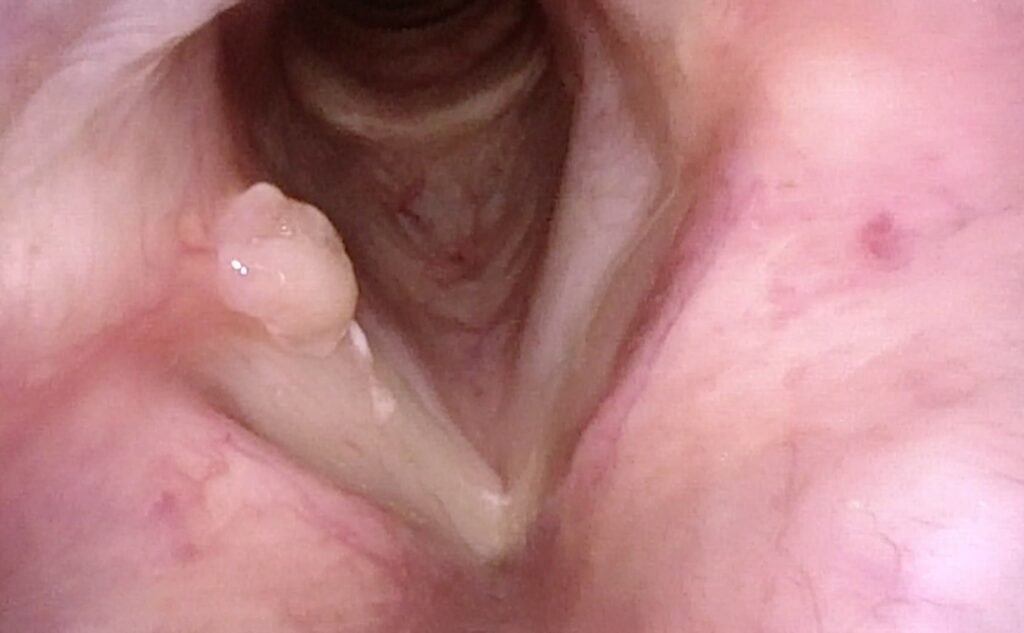
The most important causes are considered to be gastric acid reflux (laryngopharyngeal reflux) and an unfavorable vocal technique, including a too-low speaking pitch and harsh vocalizations. If the contact granuloma is surgically removed without changing anything about the causes, the risk of recurrence is very high. Therefore, voice therapy and diagnosis or treatment of laryngopharyngeal reflux with gastric acid blockers (proton pump inhibitors) for several months are recommended as an alternative or complement to surgery. Despite all such measures, contact granuloma can be very resistant to therapy or recur repeatedly. The initial surgery is often recommended to confirm histology and exclude malignant change.
Granulomas are found less frequently in women. In contrast, intubation granulomas occur more frequently in women – these are thickenings that occur after general anesthesia with intubation, also at the Processus vocalis, and are very similar to a contact granuloma. The much smaller larynx in women presumably plays a role here, and it is then exposed to greater pressure from the tube during anesthesia, given the relatively larger diameter of the routinely selected endotracheal tubes.
Because granuloma might recur frequently, co-factors such as reflux, inadequate voice technique, or vocal fold bowing should be ruled out. We recommend phonomicrosurgical removal with high-precision instruments or specialized fiber-guided laser surgery. Nerve toxin might also help. In most cases after adequate microsurgery and therapy, it will not recur again.